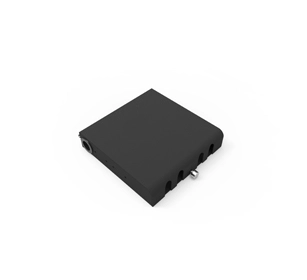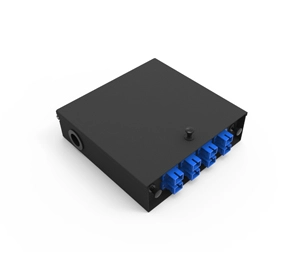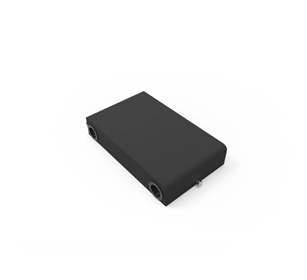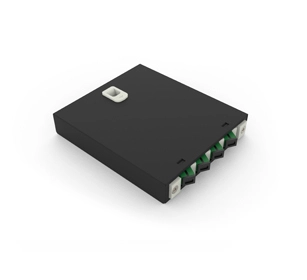
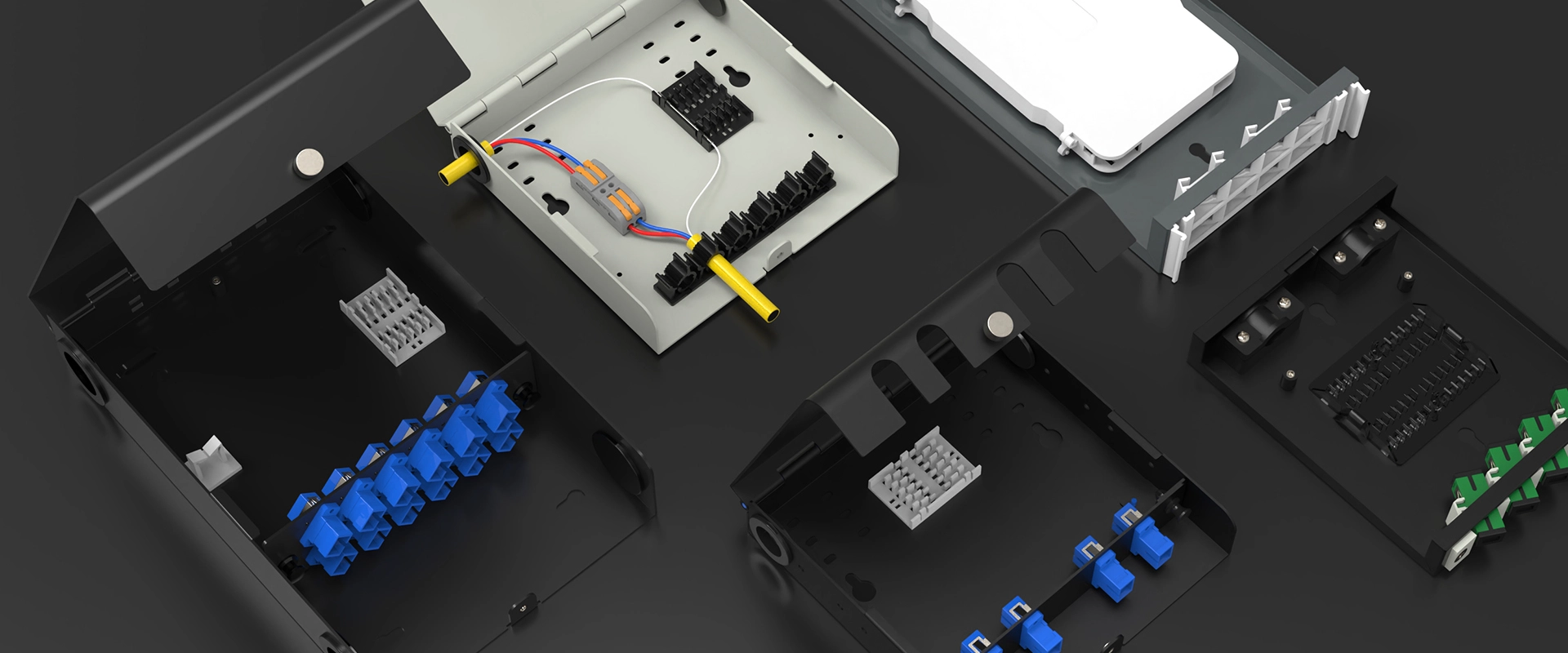

| Model | Max Capacity (Cores) | Adapter Type | Port Quantity | Protection Grade | Dimensions (mm) |
| TBA4 | 4 Cores | SC / LC Simplex | 4 | IP55 | 150 × 110 × 30 |
| TBA8 | 8 Cores | SC / LC Simplex | 8 | IP55 | 200 × 150 × 45 |
| TBA12 | 12 Cores | SC / LC Duplex | 12 | IP65 | 235 × 200 × 60 |
| TBS4 | 4 Cores | SC / LC Simplex | 4 | IP54 | 185 × 130 × 40 |
| TBS8 | 8 Cores | SC / LC Simplex | 8 | IP65 | 210 × 175 × 50 |
Material: High-quality ABS+PC plastic, ensuring high strength and resistance to UV radiation for long-term outdoor or indoor use.
Splitter Compatibility: Supports the installation of PLC splitters (1:4, 1:8) to meet diverse optical distribution needs.
Protection Level: Available in IP55 and IP65 ratings, providing excellent waterproof and dustproof performance for harsh environments.
Cable Management: Integrated with splice trays and cable routing organizers to maintain a minimum bending radius of 30mm.

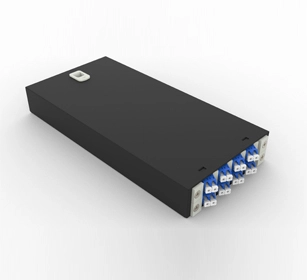
The outstanding advantage of the optical fiber terminal box is the efficiency of the welding cable fixation and its protective role in optical fiber machinery. In an optical fiber terminal box, there is always a need for insulation between the metal cable assembly and the junction box, which provides space for storage cables and other optical fibers. In addition, they are easy to install in a variety of situations because they are easy to access, thus saving time and cost.
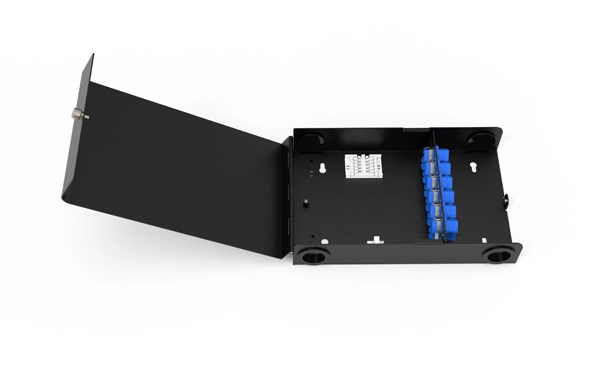
To realize the benefits of integrated infrastructure such as 5G, iot, and data centers, fiber deployment is critical as it will ensure that system integration services run efficiently and in real time.
Proper cable management is essential to reduce physical strain on fiber cables, preserve signal quality, and facilitate easy maintenance. Using tools such as trays, conduits, and cable organizers helps route cables neatly while protecting them from excessive bending or crushing, which could lead to signal attenuation.

 Can OTRANS fiber terminal boxes be used for both SC and LC adapters?
Yes. Our TBA and TBS series are designed with universal adapter plates. A single port can accommodate 1 SC Simplex adapter or 1 LC Duplex adapter, allowing you to double the fiber density (e.g., an 8-port box can support up to 16 LC fiber cores).
What is the difference between a fiber terminal box and a fiber distribution box?
While both are used for fiber management, a fiber terminal box (FTB) is typically used at the end of a fiber optic cable (the terminal point) to connect drop cables to equipment. In contrast, a fiber distribution box (FDB) is used to split one incoming optical cable into multiple outgoing fibers, often housing larger PLC splitters for mid-network distribution.
How to install a wall-mounted fiber optic terminal box?
Installation typically involves four steps:
Mounting: Fix the box to the wall using the provided expansion bolts.
Cable Entry: Lead the outdoor fiber cable through the waterproof inlet and secure the strength member.
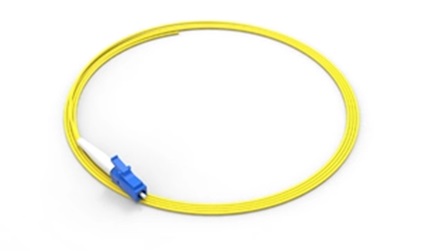
Splicing: Splice the incoming fiber with pigtails inside the splice tray.
Adapter Connection: Plug the pigtails into the adapters and connect the user patch cords. Ensure a minimum bending radius of 30mm is maintained throughout.
Why choose ABS+PC material for an outdoor fiber access terminal box?
The combination of ABS (Acrylonitrile Butadiene Styrene) and PC (Polycarbonate) provides the ideal balance of impact resistance and weatherability. This ensures the box can withstand UV radiation, extreme temperature fluctuations, and physical impact, maintaining a long service life in harsh outdoor environments (IP65 rated).

 English