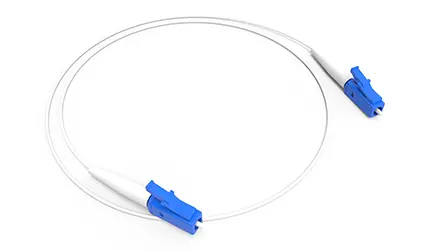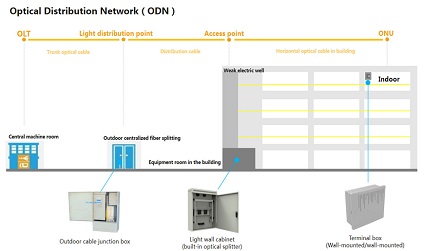

In today's world, the demand for high-speed internet and reliable data transmission has never been greater. Businesses, educational institutions, and other organizations are increasingly dependent on robust networks to handle vast amounts of data. One of the most significant technological advancements in networking is the Optical Local Area Network (OLAN). By using fiber-optic technology, optical local area networks offer impressive speeds and efficiency compared to traditional copper-based networks. In this article, we explore how optical local area networks enhance data transmission speeds and why they are becoming the preferred choice for high-performance networking solutions.
At the heart of an optical local area network is fiber-optic technology, which significantly improves data transmission speeds. Unlike traditional copper cables that rely on electrical signals to transmit data, fiber-optic cables use light signals. This fundamental difference allows optical local area networks to offer much higher bandwidth and faster data transfer rates. Fiber-optic cables can carry much more data over longer distances without signal degradation, ensuring that data reaches its destination quickly and accurately. In environments where high data transfer speeds are crucial—such as data centers, large enterprises, or campuses—fiber-optic cables provide a clear advantage by enabling smoother, faster, and more reliable data communication.
One of the primary reasons why optical local area networks improve data transmission speeds is their ability to support higher bandwidth. The vast capacity of fiber-optic cables enables them to transmit large volumes of data at speeds far exceeding traditional copper-based connections. This is especially beneficial in today's high-demand applications, including cloud computing, video conferencing, and real-time data processing. Optical local area networks are designed to handle a massive amount of simultaneous data traffic without compromising performance. As businesses continue to expand their digital infrastructure and adopt data-heavy applications, the demand for networks that can accommodate such high data loads is increasing. By using optical LANs, companies can future-proof their networking infrastructure and ensure they are prepared to meet the growing demand for faster and more reliable data transmission.
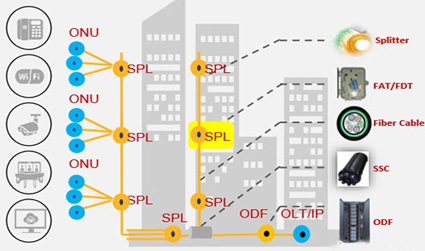
Another significant advantage of optical local area networks is their low latency, which is crucial for real-time applications like VoIP, video streaming, and gaming. Latency refers to the time it takes for data to travel from its source to its destination, and lower latency results in faster and more responsive communication. Optical local area networks are inherently low-latency due to the speed of light in fiber-optic cables, which allows for quicker transmission times compared to traditional copper-based networks. By reducing latency, optical LANs ensure that users experience seamless communication, whether for internal business operations or external interactions with clients and customers. This makes optical local area networks the ideal choice for organizations that rely on real-time communication and data transfer, ensuring a smooth user experience.
As technology continues to evolve, so does the need for scalable networking solutions that can handle future demands. Optical local area networks are incredibly scalable, meaning they can easily accommodate the increasing data demands of growing businesses. Whether an organization is expanding its operations or adopting new, data-heavy technologies, an optical local area network can be upgraded to handle larger volumes of data without a complete overhaul of the existing infrastructure. This scalability ensures that businesses can keep pace with technological advancements and evolving network requirements. Additionally, fiber-optic technology is inherently future-proof, with the ability to support much faster data transfer speeds as technology continues to develop. This makes optical local area networks an investment in both the present and future of a company's networking infrastructure.
For businesses that depend on uninterrupted data transmission, optical local area networks offer exceptional reliability and stability. Fiber-optic cables are not susceptible to electromagnetic interference (EMI) or radio frequency interference (RFI), unlike copper cables, which can be affected by electrical noise. This makes optical local area networks more reliable in environments with high levels of interference, such as industrial settings or areas with dense networking equipment. The stability provided by optical local area networks ensures that data can be transmitted consistently without disruptions, supporting business operations that rely on constant connectivity. Whether it's managing large databases or supporting a network of remote workers, the reliable performance of optical local area networks ensures that organizations can maintain smooth operations without worrying about network failures.
In conclusion, optical local area networks are revolutionizing data transmission by offering faster speeds, greater bandwidth, lower latency, and unmatched reliability. By leveraging the power of fiber optics, optical LANs provide businesses with the tools they need to support high-performance applications and ensure seamless connectivity in today's digital world. As companies continue to expand their digital presence, optical local area networks are becoming an essential component of their networking infrastructure, enabling them to handle the ever-growing demands of modern data transfer. Whether for large enterprises, data centers, or educational institutions, optical local area networks provide the speed, scalability, and reliability needed for success in a highly connected world.
 English