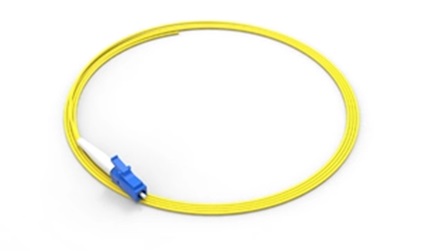



Optical fiber attenuator is a device used to adjust the intensity of optical signals, which is often used in optical fiber communication systems. When installing an optical fiber attenuator, avoid bending the optical fiber too much to avoid affecting signal transmission. In addition, attention should be paid to keeping the fiber connector and end clean to ensure the quality and stability of the optical signal. OTRANS has earned a reputation as one of the proficient fiber optical attenuator suppliers in the market, demonstrating a dedication to delivering top-notch quality.
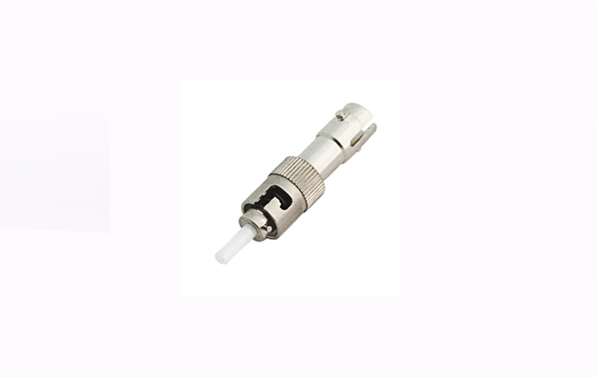
Optical fiber attenuators usually produce attenuation by absorbing light, such as solar glasses absorb additional light energy, similarly, optical fiber attenuators have an operating wavelength range that can absorb light energy, at this wavelength, it should not reflect light, as this may cause unwanted echo reflection in the optical fiber system. As one of the professional optical attenuator manufacturers, we ensure these devices maintain high precision across all specified wavelengths.
Scattering loss in fiber optics occurs primarily due to Rayleigh scattering, where small-scale irregularities within the fiber cause light to scatter, especially at shorter wavelengths. Mie scattering, caused by larger defects or contaminants, also contributes to signal degradation. Additionally, bending loss impacts signal strength when the fiber is bent beyond its minimum radius (macrobending), allowing light to escape from the core. As an experienced fiber optic attenuator factory, OTRANS ensures precise control over such factors in our high-quality attenuator designs.

Too much optical signal power can damage receivers and disrupt data. Fiber optic attenuators provide the precise signal reduction needed for optimal performance. As a leading fiber optic attenuator manufacturer, OTRANS explains the key reasons you need one.
Protect Sensitive Equipment
Prevent receiver overload and signal distortion by reducing excessively powerful optical signals to safe, manageable levels.
Balance Multi-Channel Systems
Equalize power levels across DWDM and other multi-channel networks to ensure clear, consistent data transmission for every channel.
Simulate Long-Distance Links
Accurately test system performance in a lab environment by simulating the signal loss of a long-haul fiber link.
Why Choose OTRANS as Your Supplier?
As a reliable fiber optical attenuator supplier, we offer the manufacturer's advantage:
20 Years of Expertise: Deep industry knowledge in optical connectivity solutions.
Full In-House Manufacturing: Control over the entire production process in our 40,000 sqm facility for guaranteed quality and volume orders (OEM/ODM).
Built to International Standards: Products comply with IEC & TIA/EIA standards for guaranteed compatibility and performance.
National High-Tech Enterprise: A proven record of innovation and excellence.

 Where are fiber optic attenuators used?
Fiber optic attenuators are widely applied in:
PON/FTTH Networks — Reduce strong downstream signals from OLT to prevent ONT receiver overload.
DWDM/CWDM Systems — Balance power levels across multiple channels to ensure uniform performance and minimize crosstalk.
Long-Haul Telecom Links — Compensate for over-amplified signals or simulate distance-related loss.
Laboratory & Testing — Emulate real-world attenuation for BER testing, system commissioning, or receiver stress testing.
Data Centers & Enterprise Networks — Manage power budgets in short-reach links with high-power transceivers.
They are essential wherever optical power exceeds safe receiver limits. OTRANS attenuators support all these scenarios with reliable, standards-compliant designs.
What is a fiber optic attenuator?
A fiber optic attenuator is a passive optical component that deliberately reduces the power level of an optical signal by a specific amount (measured in decibels, dB) without significantly distorting the signal's waveform, wavelength, or phase. It prevents receiver overload when the incoming optical power is too high (e.g., from strong lasers or short-distance links), which could otherwise cause saturation, distortion, or equipment damage.
Attenuators are essential in fiber optic communication systems, especially single-mode networks. OTRANS manufactures high-precision fiber optic attenuators with low insertion loss variation and excellent return loss, available in fixed and variable types to suit PON, DWDM, telecom, and testing applications.
How does a fiber optic attenuator work?
Fiber optic attenuators reduce optical power through controlled loss mechanisms such as absorption (using doped fiber or absorptive material to convert light energy to heat), scattering (diffusing light), gap loss (air gap between fibers), or intentional misalignment.
Fixed attenuators provide a constant, preset attenuation level (e.g., 5 dB, 10 dB) via built-in components like doped fiber or film filters.
Variable attenuators (VOA) allow manual or electronic adjustment of attenuation (e.g., via a screw mechanism or MEMS technology) for dynamic control.
They operate across standard wavelengths (1310 nm, 1550 nm, or broadband 1260–1625 nm) with minimal back-reflection (high return loss >50 dB for APC connectors) to avoid disrupting upstream transmitters. Place the attenuator near the receiver for optimal protection.
What dB values are typical for fiber optic attenuators?
Typical attenuation values depend on the type:
Fixed Attenuators:
Standard range: 1 dB to 30 dB.
Most commonly used: 3 dB, 5 dB, 7 dB, 10 dB, 15 dB, 20 dB.
Higher values (25–30 dB) for very strong signals or long-haul simulation.
Variable Attenuators (VOA):
Adjustable from 0 dB up to 40–60 dB (depending on model).
Resolution: 0.1 dB or 0.5 dB steps for precise control.
Accuracy is typically ±0.5 dB (up to 10 dB) or ±10% (higher values). OTRANS attenuators meet tight tolerance specs for consistent performance across wavelengths.

 English